

What to ask a commercial concrete contractor High Point NC businesses hire before the first pour
Quick Answer: Commercial concrete contractor High Point NC work covers the slab, the foundation and the flatwork around a business building, all ready for heavy loads on a set date. DGS Concrete & Steel Structures pours all three with one crew, and it also builds the steel building that stands on the slab. Call (336) 807-0458 for a free written estimate after a site visit.
This guide covers the five things a business owner should settle before hiring a concrete crew.
- What a business needs from a commercial concrete contractor
- What slabs for warehouses, shops and steel buildings must carry
- How red clay changes the base under a slab
- What reinforcement, control joints and curing do before heavy loads arrive
- Why one company for the steel building and its slab keeps a job simple, and how DGS runs a job
What does a business need from a commercial concrete contractor?
A commercial concrete contractor High Point NC businesses hire needs to get three things right. The slab must suit its loads, the schedule must suit a working site, and the plan and the price must be in writing. When you compare the best commercial concrete contractors in High Point, look past the price to those three things, and read what past customers say about the schedule and the clean-up.
Loads come first. A shop floor may carry forklifts, pallet racks and delivery trucks, and a steel building slab carries the walls, the roof and everything inside. The crew needs to know those loads before the base is prepared, because the loads decide how thick and how strong the slab must be.
Schedule comes second. Staff, deliveries and customers still need to reach the site while the work goes on. Use the site visit to tell us about your hours, your deliveries and where trucks can stand. Then the pour day and the work area can be planned around them.
Flatwork comes third. Concrete flatwork High Point NC businesses need includes entrance drives, walkways and the slab around a building. Parking areas and pads for equipment or trucks are flatwork too. They carry heavier loads than a driveway for cars, so the crew plans the thickness and the reinforcement for the weight. DGS pours driveways, patios and slabs, so the concrete services High Point NC owners want around a building can come from one crew.
Our page on concrete contractors High Point NC lists everything we pour, from driveways and patios to slabs and steel building foundations. For the entrance of a business, see our page on concrete driveways.
What must a slab for a warehouse, shop or steel building carry?
A concrete slab for a steel building must be flat, level and strong enough for the building, the equipment and the traffic it will carry. Those loads set the thickness of the slab and the reinforcement inside it. A slab for pallet racks and forklifts is built differently from a slab for a small garage.
Most shop and warehouse floors are slabs on grade, which means the concrete sits directly on the prepared ground. The weight of a building comes down along its walls and columns, so the slab is made thicker there. That thicker part is called a footing, and it spreads the weight over the ground. In a monolithic slab, the slab and its footing are poured together as one piece, and that one piece works as the foundation.
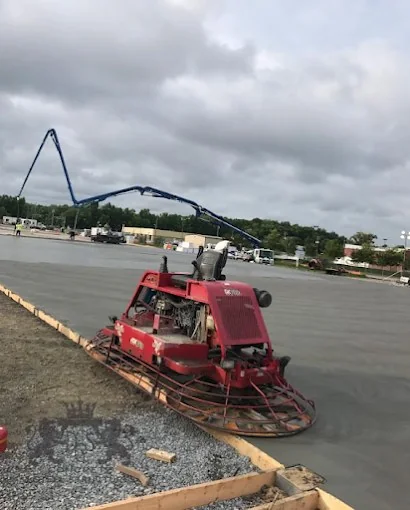
The surface matters too. A shop or warehouse floor is usually finished smooth with a power trowel, like the machine in the first photo. An outdoor slab usually gets a broom finish for grip. Where a floor sits on the ground, a vapor barrier under the slab helps keep ground moisture from rising into it.
How does red clay change the base under a commercial slab?
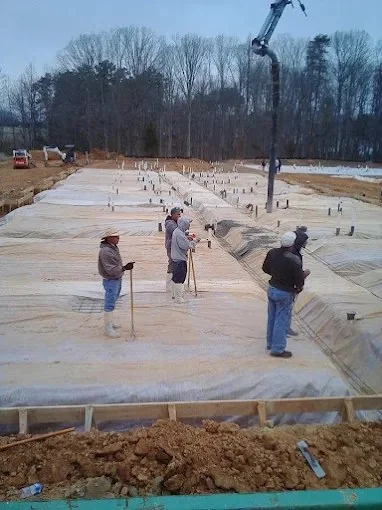
Much of the Piedmont has red clay soil that holds water, so the ground under a slab needs careful preparation before any concrete is poured. Wet clay is soft, and soft ground lets a slab settle and crack, even when the concrete itself is good.
A sound base starts with the grade. The crew clears the area and digs out soft and wet spots. Then it shapes the ground so water runs away from the slab and firms up the base the concrete will sit on. Rain that collects beside a slab soaks the clay and weakens the support, so drainage matters as much as the slab. Before any digging starts, call NC 811 so buried utility lines are marked.
What do reinforcement, control joints and curing do before heavy loads arrive?
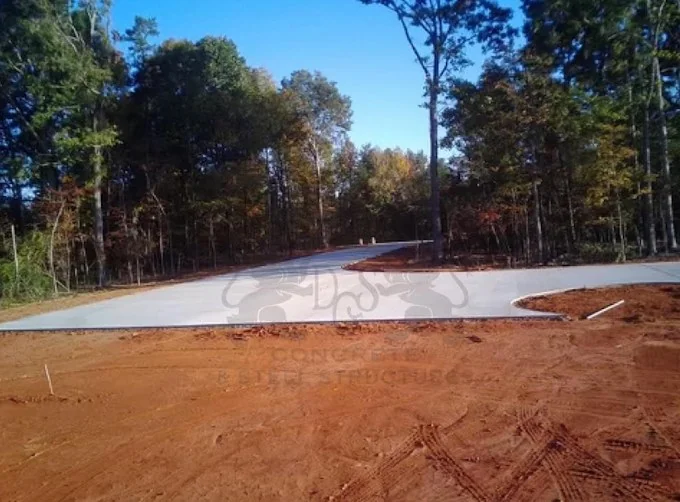
Reinforcement, control joints and curing each protect a heavy slab in a different way, and all three must be handled properly before heavy loads arrive.
- Reinforcement. Steel reinforcement sits inside the slab and holds the concrete together if it cracks. The crew sets it at the right height, because reinforcement that lies on the ground does very little.
- Control joints. Concrete shrinks as it dries, so every slab cracks a little. Control joints are planned lines that give those cracks a straight, hidden path instead of a random one.
- Curing. Curing is the time when new concrete is protected while it gains strength. A slab that is loaded too early can crack, so the crew tells you when each kind of load can go on it.
For a new driveway, typical guidance from the Concrete Network is to wait at least 24 hours before walking on it. The same guidance is about 7 days before driving a car on it and at least 28 days before heavy trucks.
Cold weather makes the wait longer. A slab for a shop or warehouse follows the same idea. The DGS crew confirms the timing for each job before a forklift or a delivery truck goes on it.
Why should one company build the steel building and pour its slab?
One company should do both because the slab and the building have to fit each other, and one team can plan them together. DGS Concrete & Steel Structures builds steel buildings, such as garages, workshops, storage buildings and commercial buildings, and pours the slab or foundation they stand on.
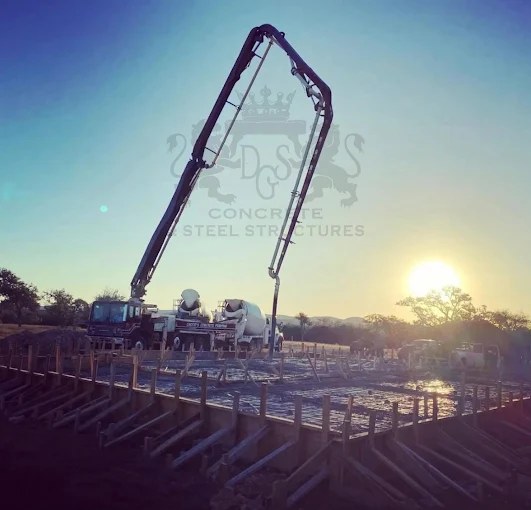
Some steel building sellers leave the slab to the customer. The owner then has to find a second crew, match two schedules and make sure the two jobs line up. With DGS, one team plans the slab and the building together. The slab is level and reinforced to match the building plans, and one company answers for both.
When you choose a commercial concrete contractor High Point NC offers for a steel building, ask who will pour the slab and who will build the walls. Read more about our steel structures and our metal building monolithic slabs. Our page on monolithic slabs describes slabs that are poured with their footing as one piece. For foundation slabs on their own, see our page on slab foundations.
DGS is a family owned, fully insured crew that handles concrete work High Point businesses need. It pours concrete within about a 3 hour drive of ZIP 27263, and its steel buildings reach the whole U.S. East Coast.
How does DGS handle a commercial concrete job?
DGS handles a commercial concrete job in five steps, with one crew from the first site visit to the final walkthrough.
- Step 1, site visit and written estimate. We walk the site, look at access, ground and slope, and ask what the slab must carry and when you need it. Then we give you a free written estimate.
- Step 2, site and base preparation. The crew clears the area, shapes the grade and firms up the base. On red clay we deal with soft and wet spots first.
- Step 3, forms and reinforcement. We set the forms, lay a vapor barrier where the slab needs one and place the reinforcement at the right height.
- Step 4, pour and finish. We pour on the day agreed with you and level the concrete. Then we finish the surface to suit its use, such as a smooth power-troweled floor for a shop.
- Step 5, joints, curing and walkthrough. We plan the control joints, protect the slab while it cures and walk the finished work with you, including when heavier loads can go on it.
If you want to learn how concrete is bought, priced and cured before you call, read our guide to concrete in High Point NC.
Plan your slab and your steel building with one company. Get a free estimate or call (336) 807-0458.
Frequently Asked Questions
1. Does DGS pour concrete for businesses?
Yes. DGS works as a commercial concrete contractor High Point NC businesses can call for slabs, foundations and flatwork, and it also builds commercial steel buildings. DGS pours driveways, patios and slabs for homeowners too, so one company can handle both kinds of work. You get a free written estimate after a site visit.
2. What does a concrete slab for a steel building need?
A slab for a steel building needs a firm, well-drained base and a level surface. It also needs reinforcement and joints planned before the pour, and time to cure before heavy loads. DGS builds steel buildings and pours their slabs, so one crew plans the concrete and the building together.
3. How do concrete contractors charge for commercial work?
A concrete price depends on the size and thickness of the slab, the base work, the reinforcement, the finish and the weather. Access to the site and the removal of old concrete also count. DGS adds these into one written price after a site visit. Call (336) 807-0458 for a free estimate.
4. What should I tell a concrete contractor at the site visit?
Tell the crew what the slab must carry, how many square feet it covers and when you need it. Explain how deliveries and customers reach the site and where trucks can stand. Share any steel building plans you have, and mention drainage problems or old concrete that must come out. Those details let the crew plan the base, the pour day and the work area.
5. What areas does DGS serve?
DGS pours concrete across the Triad, including Greensboro, Winston-Salem, Thomasville, Archdale, Jamestown, Trinity and Kernersville. For concrete the crew works within about a 3 hour drive of ZIP 27263. Steel buildings reach the whole U.S. East Coast.
6. Is DGS insured?
Yes. DGS is family owned and fully insured, so you are protected while the crew works on your property. Ask for your free written estimate at (336) 807-0458.