

A plain guide to concrete repair High Point NC owners can use before calling a crew
Quick Answer: Concrete repair High Point NC suits narrow cracks in a level, firm slab, while a sunken or broken section often needs to be replaced for a lasting fix. DGS Concrete & Steel Structures repairs and replaces driveways and pours new concrete where damaged slabs come out. Call (336) 807-0458 for a free written estimate after a site visit, and DGS will tell you which one your slab needs.
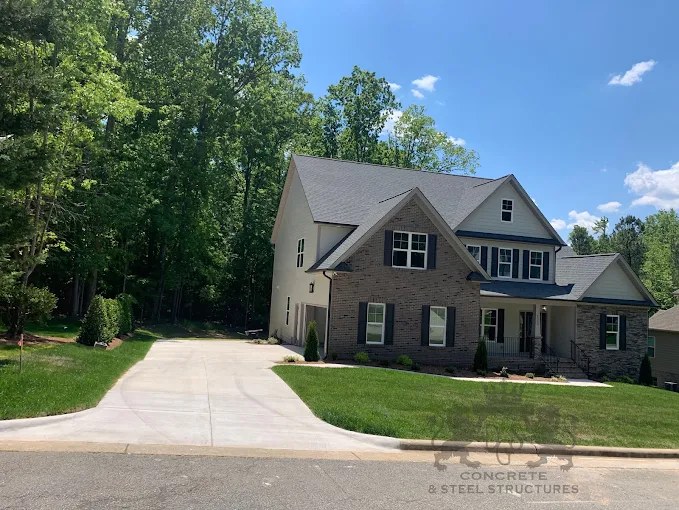
This guide covers the five things to know before you decide what to do about a damaged slab.
- The signs that concrete needs repair
- When repair is enough and when replacement is the better choice
- Whether a skim coat of concrete can go over old concrete
- What DGS checks at the free estimate visit
- How DGS handles a repair or a replacement
What are the signs that concrete needs repair?
Concrete repair High Point NC jobs usually start with one of six signs. The signs are cracks, sunken or uneven sections, trip edges, a flaking surface, poor drainage and roots pushing up from below.
Cracks
Cracks are a common sign of damaged concrete, and their width and direction show how serious they are. A thin crack that stays the same for months is usually only a surface problem. A crack that keeps growing, or one where one side sits higher than the other, points to movement under the slab.
Sunken or uneven sections
A sunken or uneven section means the ground under the slab has moved or washed out. The section sits lower than its neighbors or rocks a little when you step on it. It has usually lost support from below.
Trip edges
A trip edge is a joint or crack where one side of the concrete sits higher than the other. It can catch a shoe, a wheel or a mower. A trip edge is a safety problem, so deal with it before someone gets hurt.
Surface flaking
Surface flaking is when the top layer of the concrete peels or crumbles and leaves a rough, pitted surface. It often starts when water gets into a weak surface and freezes. The flaking may stay in one area or spread across the whole slab.
Drainage problems
Water that stands on a slab, or runs toward a garage or house, points to a slope problem. Much of the Piedmont has red clay soil that holds water. Pooled water soaks the clay beside the slab, softens it and speeds up every other kind of damage.
Tree roots
Tree roots push up and crack slabs that sit close to trees. A root can lift one section until it becomes a trip edge. If a root is the cause, plan for it before any new concrete goes in, or the same lift will come back.
Should you repair or replace damaged concrete?
Repair the slab when the damage is on the surface, or when the cracks are narrow and the slab is still level and firm. Replace the section when it has sunk, stepped up, cracked into pieces or lost the ground under it.
Repair is usually the right call in these cases.
- The cracks are narrow and have not grown.
- The slab is level and does not rock when you step on it.
- The damage is only on the surface.
- Water runs off the slab and does not stand on it.
Replacement is usually the better choice in these cases.
- A section has sunk, or one side of a crack sits higher than the other.
- The slab has cracked into several pieces.
- The same spot has been patched more than once.
- The ground under the slab has washed out or gone soft.
Repeated patching is the clearest warning. If the same crack or edge keeps coming back, the cause is under the slab, and another patch will not fix it. Any concrete repair High Point NC homeowners plan should deal with that cause, not only the visible crack.
Driveway replacement means taking out the damaged slab, rebuilding the base and pouring new concrete. Some owners search for concrete leveling High Point services when a slab sinks. A sunken slab often needs the section replaced for a lasting fix, because the ground under it has washed out or settled. DGS can take out the sunken section and pour new concrete on a rebuilt base.
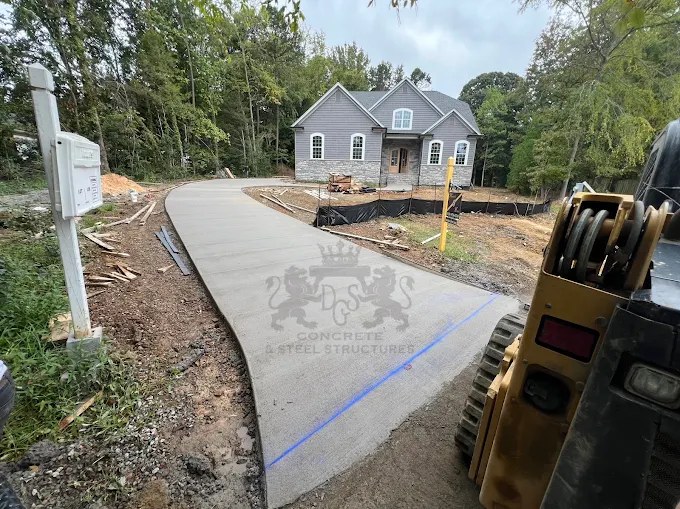
Can you put a skim coat of concrete over old concrete?
Sometimes, but only when the old slab is level and firm and the damage is only on the surface, such as light wear. A skim coat is a thin new layer, so it cannot fix a problem under the slab. If the slab has sunk or has cracks that keep growing, the thin layer usually cracks in the same places.
New concrete also does not bond well to old concrete on its own. The old surface must be clean and rough, with no dust, oil or loose flakes, and a bonding agent is often brushed on first. Even then, a thin layer over a weak surface can peel away.
That is why DGS looks at the cause before the surface. At the free estimate visit, we check whether the damage is only on top or goes deeper, and we tell you in writing whether the slab can stay or a section should be replaced.
How does DGS check a slab at the free estimate visit?
At the free estimate visit, we walk the whole slab, measure the damage, look for the cause and tell you in writing whether we recommend a repair or a replacement. When you compare the best concrete repair companies in High Point, ask each one how it finds the cause of the damage.
Here is what we look at on site.
- The cracks. We check how wide they are, which way they run and whether one side sits higher than the other.
- The surface. We look for flaking, pitting and worn areas, and we check whether the damage is only on top.
- The slope. We see where rain runs, where water stands and whether it drains toward a garage or house.
- The edges and joints. We look for trip edges, gaps and sections that have moved.
- The ground and the trees. We look for soft spots, washed-out edges and roots near the slab.
- How you use the slab. A driveway that carries trucks is judged differently from a walkway or a patio.
After the walk, you get a free written estimate. It says what we found, what we recommend and what the work includes, so you can decide with the facts in front of you.
How does DGS handle concrete repair and replacement?
DGS handles concrete repair and replacement in five steps, and the same crew stays with the job from the first visit to the walkthrough.
- Step 1, free estimate visit. We walk the slab with you, look for the cause of the damage and give you a free written estimate.
- Step 2, plan around the cause. We plan the work around what caused the damage, such as poor slope, soft ground or a root, so the new work does not fail the same way.
- Step 3, repair or take out. We repair the slab where it can stay and take out the damaged section where it cannot.
- Step 4, rebuild and pour. The crew firms up the base, sets the forms and reinforcement, pours the new concrete and finishes the surface.
- Step 5, cure and walk through. We protect the new concrete while it cures and walk the finished work with you, including when you can use it again.
DGS is family owned and fully insured. Our page on concrete driveway repair High Point explains how we repair and replace driveways, and our page on driveways covers new driveway installation.
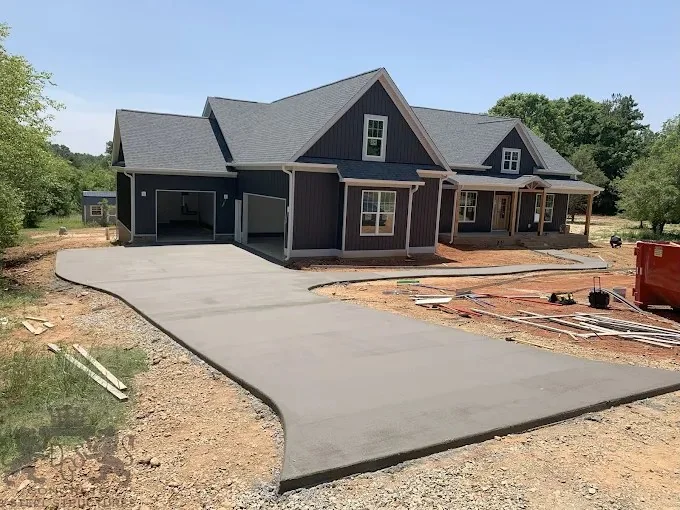
DGS also offers the concrete services High Point NC homeowners need for new work, such as driveways, patios and slabs. Our page on concrete contractors High Point NC lists them all. If you plan to replace a whole slab, read our guide to concrete in High Point NC to see how concrete is bought, priced and cured.
Not sure if your slab needs a repair or a new section? Get a free estimate or call (336) 807-0458.
Frequently Asked Questions
1. How do I know if my concrete needs repair or replacement?
A narrow crack in a level, firm slab is usually a repair, and a section that has sunk, stepped up or broken into pieces usually needs to be replaced. Concrete repair High Point NC jobs depend on how deep the damage goes. DGS tells you which one you need in writing after a free site visit.
2. Why does concrete crack even when it was poured correctly?
Concrete shrinks as it dries and moves with changes in temperature and moisture, so some cracking is normal. Planned control joints guide where the cracks form, and a firm base and reinforcement keep them from spreading. Water under the slab, heavy loads and roots can cause more serious cracks.
3. Is it worth patching a sunken concrete slab?
Usually not for long. A slab sinks because the ground under it has washed out or settled, so patching the top does not fix the cause. Replacing the section on a rebuilt base is often the lasting fix, and DGS gives you its recommendation in writing after a site visit.
4. How do contractors charge for concrete repair?
A repair or replacement price depends on how much concrete is damaged, how thick it is, whether the base must be rebuilt and how easy the site is to reach. The removal of the old concrete, the finish and the weather also count. DGS adds these into one written price after a site visit. Call (336) 807-0458 for a free estimate.
5. How much is 1 yard of concrete in North Carolina?
There is no one price that fits every job, because a repair price covers the base work, the removal of the old slab and the finish as well as the concrete. You can work out the amount yourself, though. One cubic yard is 27 cubic feet, so it covers about 81 square feet at 4 inches thick and about 54 square feet at 6 inches thick. A section that measures 10 feet by 10 feet is 100 square feet, which needs about 1.2 cubic yards at 4 inches. DGS puts every part into one written price after a site visit, so call (336) 807-0458 for a free estimate.
6. Can one damaged section be replaced without redoing the whole slab?
Often yes, when joints divide the slab into sections and the rest of the slab is level and firm. We decide this at the free estimate visit and put the scope in writing.
7. What areas does DGS serve for concrete work?
DGS pours concrete across the Triad, including Greensboro, Winston-Salem, Thomasville, Archdale, Jamestown, Trinity and Kernersville. The crew works within about a 3 hour drive of ZIP 27263. DGS is family owned and fully insured.